
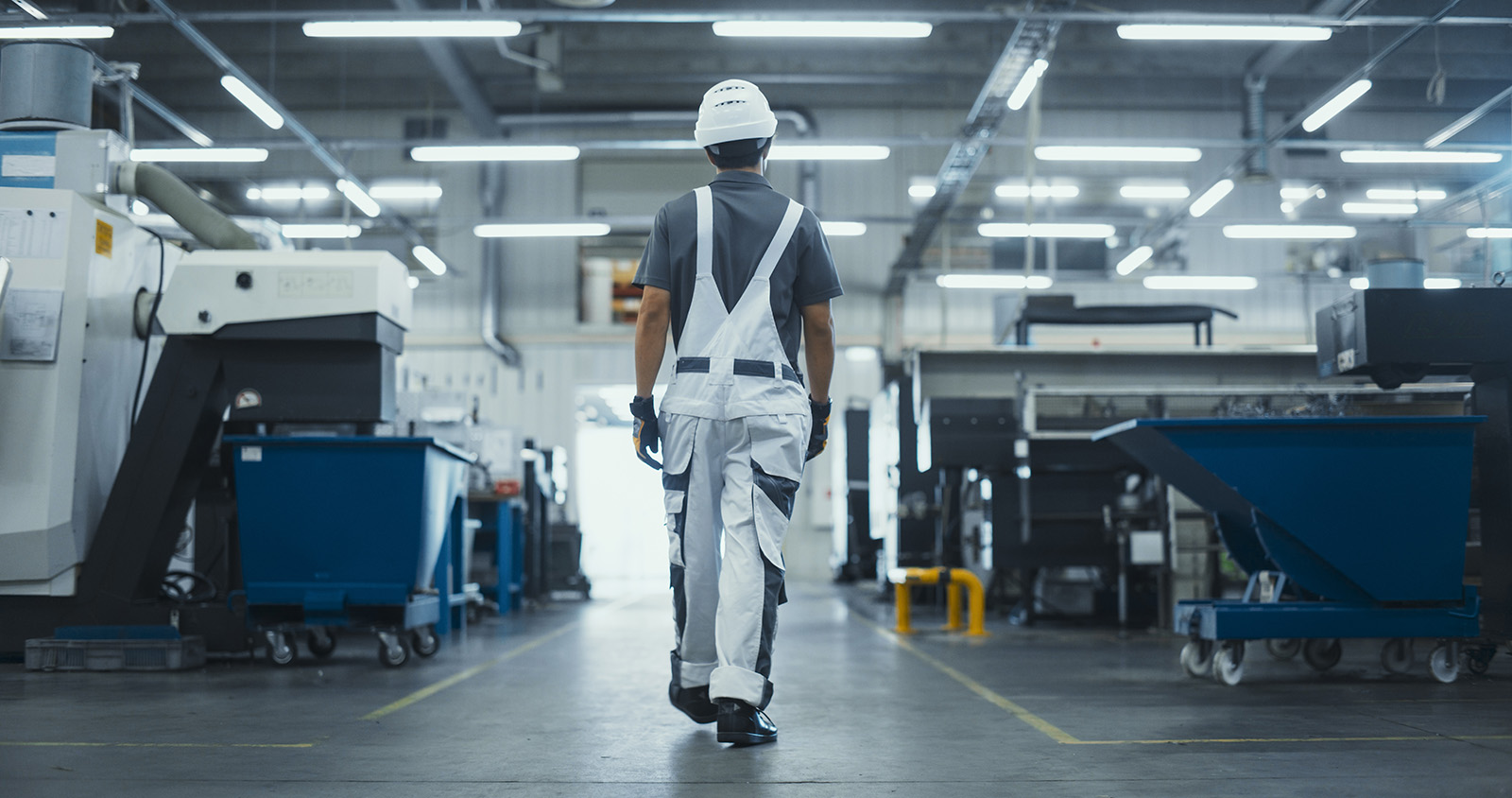
In the facilities of one of the world’s leading Japanese automotive parts manufacturers, we established a comprehensive Indoor Positioning System (RTLS) to increase production efficiency and eliminate logistical bottlenecks. By combining a UWB architecture that tracks personnel movements with centimeter precision and a low-energy BLE infrastructure that monitors the location of production molds on the same gateway network, we provided end-to-end traceability across the factory.
Operational Process Challenges
- Logistical Bottlenecks: Operational slowdowns resulting from the inability to clearly see the routes and movement patterns used by personnel carrying materials to the lines.
- Inefficient Route Planning: Failure to optimize personnel routes due to material flow being tracked through manual methods.
- Asset Tracking Difficulties: Time losses experienced during searching processes because the real-time locations of critical production molds in the factory area were unknown.
What Have We Achieved?
1. Precise Personnel Navigation
By monitoring personnel movements step-by-step on a centimeter basis, we created a digital movement map of the entire production area; this allowed us to identify and eliminate logistical bottlenecks.
2. Optimized Operational Flow
We increased material distribution speed and maximized labor efficiency by creating more efficient routes for personnel.
3. Zero Loss in Mold Tracking
By making critical production molds trackable in real-time with BLE infrastructure, we ended production downtimes caused by “searching”.
4. Cost Advantage via Integrated Infrastructure
We optimized hardware investment by managing both UWB and BLE-based data through the same IoT Gateway network.
Implemented Solution
We built the facility’s digital transformation architecture on an advanced hybrid monitoring ecosystem that blends the highest precision with maximum energy efficiency. For the personnel mobility at the center of the operation, we utilized the centimeter-level measurement capability of UWB (Ultra-Wideband) technology; through smart tags assigned to personnel, we mapped the site step-by-step by transforming all routes and operational pauses into “digital footprints”. We optimized data traffic by transferring this massive data set collected by UWB tags from surrounding antennas to our central IoT Gateway network via the low-energy BLE protocol.
Simultaneously, we deployed an industrially durable BLE (Bluetooth Low Energy) infrastructure for tracking critical production molds. Signal strength (RSSI) data collected by smart sensors placed on the molds from strategic reference points in the field was transmitted to local servers via our shared Gateway network used in common with personnel. For energy management, we designed an engineering-marvel “sleep mode” algorithm; thanks to accelerometers within the tags placed on the molds, the system automatically switches to “deep sleep” mode when no physical movement or vibration is detected, offering efficiency that extends battery life over years.
We processed this raw and complex data stack coming from the Gateway layer using our smart algorithms, which are specifically calibrated for the factory’s metal density and physical obstacles to minimize the margin of error. In the final stage, we transformed every mobile asset in the field into high-resolution live tracking screens, density analyses that decipher operational bottlenecks, and strategic reports that accelerate managerial decision-making processes on our web-based management panel.